The METNEDIA Summer School 2026 will take place at the University of Piemonte Orientale on 24–25 June, offering two days of training in biomarker discovery, metabolomics, lipidomics and multi-omics workflows. The programme includes lectures, practical rotations and a mini-workshop on clinical interpretation. A focused training experience for early-career and experienced researchers alike.
The METNEDIA project strengthens European capacity in biomarker discovery, multi-omics analysis and precision medicine for neurodegenerative diseases. A core element of the project is the exchange of expertise through staff exchanges and structured training activities that support researchers at different career stages.
As part of this effort, the METNEDIA Summer School 2026 offers an intensive two-day programme hosted by the University of Piemonte Orientale combining expert lectures with hands-on laboratory rotations in metabolomics, lipidomics and multi-omics workflows. Participants will explore analytical platforms, sample-prep workflows and data-analysis strategies used in metabolomics and lipidomics, with a focus on their application in biomarker research.
Topic
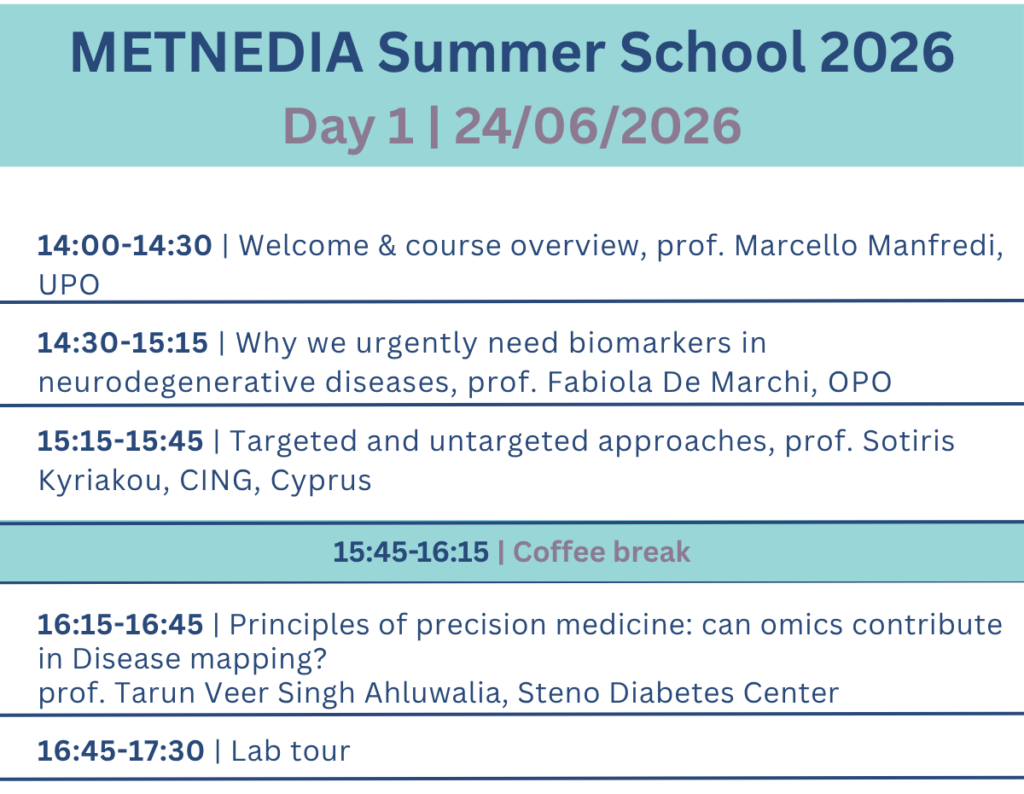
The first day focuses on the clinical and scientific need for biomarkers, targeted and untargeted metabolomics strategies, and the role of multi-omics in precision medicine. Participants will also have the opportunity to visit the host laboratories and gain an overview of the instrumentation used in metabolomics and lipidomics research.
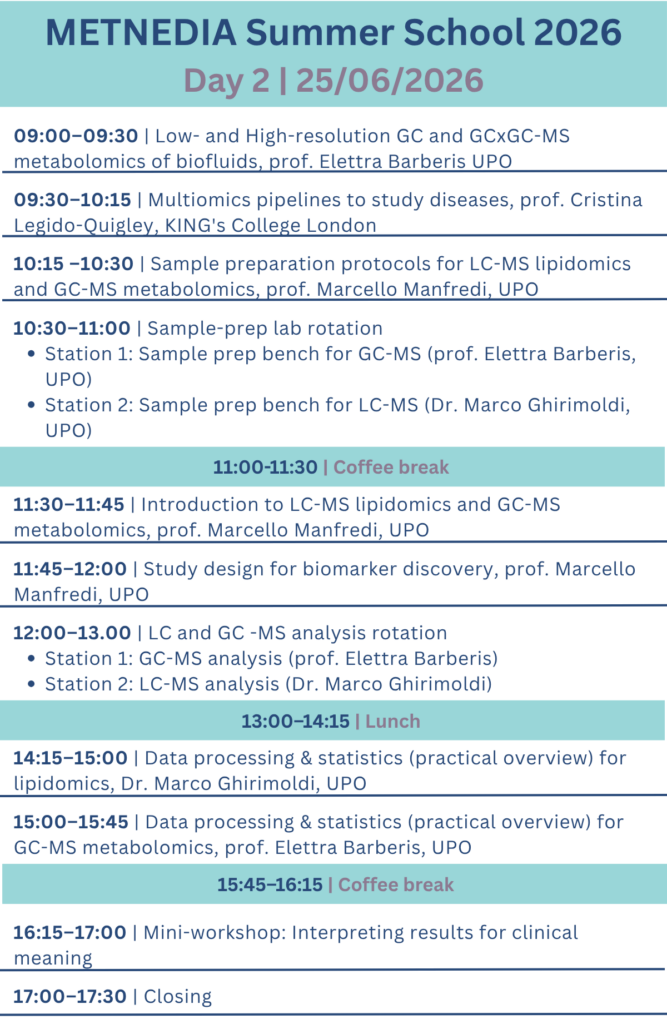
The second day provides a deeper dive into experimental workflows, starting with high‑resolution GC‑MS and GCxGC-MS approaches, followed by multi-omics pipelines and practical demonstrations of sample‑preparation protocols for both GC-MS and LC-MS. Hands-on rotations allow participants to observe sample preparation and analytical runs directly at the bench. The afternoon sessions introduce data‑processing strategies for lipidomics and metabolomics, leading into a mini workshop dedicated to interpreting analytical results in a clinical context.